AI-Powered Learning
Build your learning path with AI
Generate structured course roadmaps from any topic. Visualize your learning journey as an interactive tree and master subjects step by step.
Course Builder
Enter any topic and let AI generate a full curriculum tree with modules and lessons.
Explore →Learning Chamber
Navigate your generated course trees, track progress, and dive deep into each lesson.
Explore →Payment Plans
Flexible pricing to unlock advanced features, deeper trees, and unlimited generation.
Explore →Example: AP Biology Course Map
Click any node to explore its prerequisites or descendants.
1
Scientific Method, Experimental Design, and Data Analysis (Core)
2
General Chemistry Foundations for Biology
3
Quantitative Reasoning for Biology (Units, Graphs, Ratios)
4
Levels of Biological Organization (Cell → Organism → Ecosystem)
5
Water, pH, and Buffering
6
Biomolecules: Carbohydrates, Lipids, Proteins, Nucleic Acids
7
AP Biology Lab/Investigation Skills (Controls, Variables, Scientific Reasoning)
8
Homeostasis and Feedback (Conceptual Overview)
9
Cell Structure and Organelles (Prokaryote vs Eukaryote)
10
Evolution and Ecology: Core Concepts (Fitness, Selection, Niches, Interactions)
11
Cell Membranes and Transport (Diffusion, Osmosis, Active Transport)
12
Enzymes: Function, Active Site, and Factors Affecting Rate
13
Organelles and Energy Conversions (Mitochondria/Chloroplasts)
14
Homeostasis Through Transport and Feedback Loops
15
Excretion and Osmoregulation (Kidney Concepts, Water/Salt Balance)
16
Energy in Cells: ATP, Redox, and Coupled Reactions
17
Protein Structure–Function Relationships (Primary→Quaternary; Denaturation)
18
Cell Communication and Signal Transduction (Receptors, Second Messengers)
19
Photosynthesis Overview (Inputs/Outputs and Big Picture)
20
Cellular Respiration Overview (Glycolysis → Krebs → ETC)
21
Cell Cycle, Mitosis, and Meiosis (Chromosome Behavior)
22
Photosynthesis Light Reactions (PSII/PSI, Electron Transport, ATP/NADPH)
23
Glycolysis and Fermentation (ATP Yield, NAD+ Recycling)
24
Mendelian Genetics Basics (Segregation, Independent Assortment)
25
Chromosome Concepts Refresher (Why Chromosomes Matter for Genetics)
26
Calvin Cycle (Carbon Fixation, Reduction, Regeneration of RuBP)
27
Krebs Cycle (Citric Acid Cycle and CO2 Release)
28
Sources of Genetic Variation (Crossing Over, Independent Assortment, Random Fertilization)
29
Molecular Genetics Basics: DNA Structure, RNA Types, and Base Pairing
30
Electron Transport Chain and Chemiosmosis (Proton Gradient, ATP Synthase)
31
Non-Mendelian Patterns (Dominance, Codominance, Incomplete Dominance)
32
Gene Linkage and Chromosome Mapping (Recombination Frequency)
33
Population Genetics Foundations (Allele Frequencies, Hardy–Weinberg)
34
DNA Replication (Semiconservative Replication, Leading/Lagging Strands)
35
Natural Selection Mechanisms (Directional/Stabilizing/Disruptive; Adaptation)
36
Genetic Drift (Founder Effect, Bottleneck) and Its Consequences
37
Transcription and RNA Processing (Promoters, Introns/Exons, Splicing)
38
Biotechnology Tools (PCR, Gel Electrophoresis, Recombinant DNA Overview)
39
Speciation and Biodiversity (Isolation, Gene Flow, Reproductive Barriers)
40
Population Ecology and Energy/Matter Flow (Demography, Trophic Levels)
41
Translation (Ribosomes, tRNA, Codons, Start/Stop, Polypeptides)
42
Genome Analysis and Bioinformatics (Reading Patterns, Comparing Sequences)
43
Gene Flow (Migration) and How It Alters Allele Frequencies
44
Community and Ecosystem Dynamics (Succession, Biogeochemical Cycles, Limiting Factors)
45
Gene Regulation (Operons and Regulatory Proteins)
46
Ecosystem Responses to Climate and Disturbance (Resilience, Feedbacks)
47
Gene Regulation in Eukaryotes (Transcription Factors, Enhancers, Epigenetics Intro)
48
Metabolic Pathways and Energy Budgeting (Catabolic vs Anabolic; Regulation)
49
Epigenetics and Chromatin Remodeling (Histones, DNA Methylation Concepts)
50
AP Biology Integrative Synthesis (Cross-Unit Problem Solving)
51
Cellular Responses to Environmental Stresses (Signal Integration and Regulation)
52
Reproduction and Development (Life Cycles; Embryonic Development Concepts)
53
Organismal Systems and Physiology Overview (Systems Interdependence)
54
Digestion, Nutrient Absorption, and Transport (Conceptual Human/Animal Focus)
55
Endocrine and Nervous System Control (Hormones, Feedback, Homeostasis)
56
Circulation and Gas Exchange (O2/CO2 Transport and Exchange Surfaces)
57
Innate and Adaptive Immunity (Recognition, Clonal Expansion, Memory)
58
Respiratory Physiology (Linking O2 Availability to Cellular Respiration)
Interactive AI Lessons
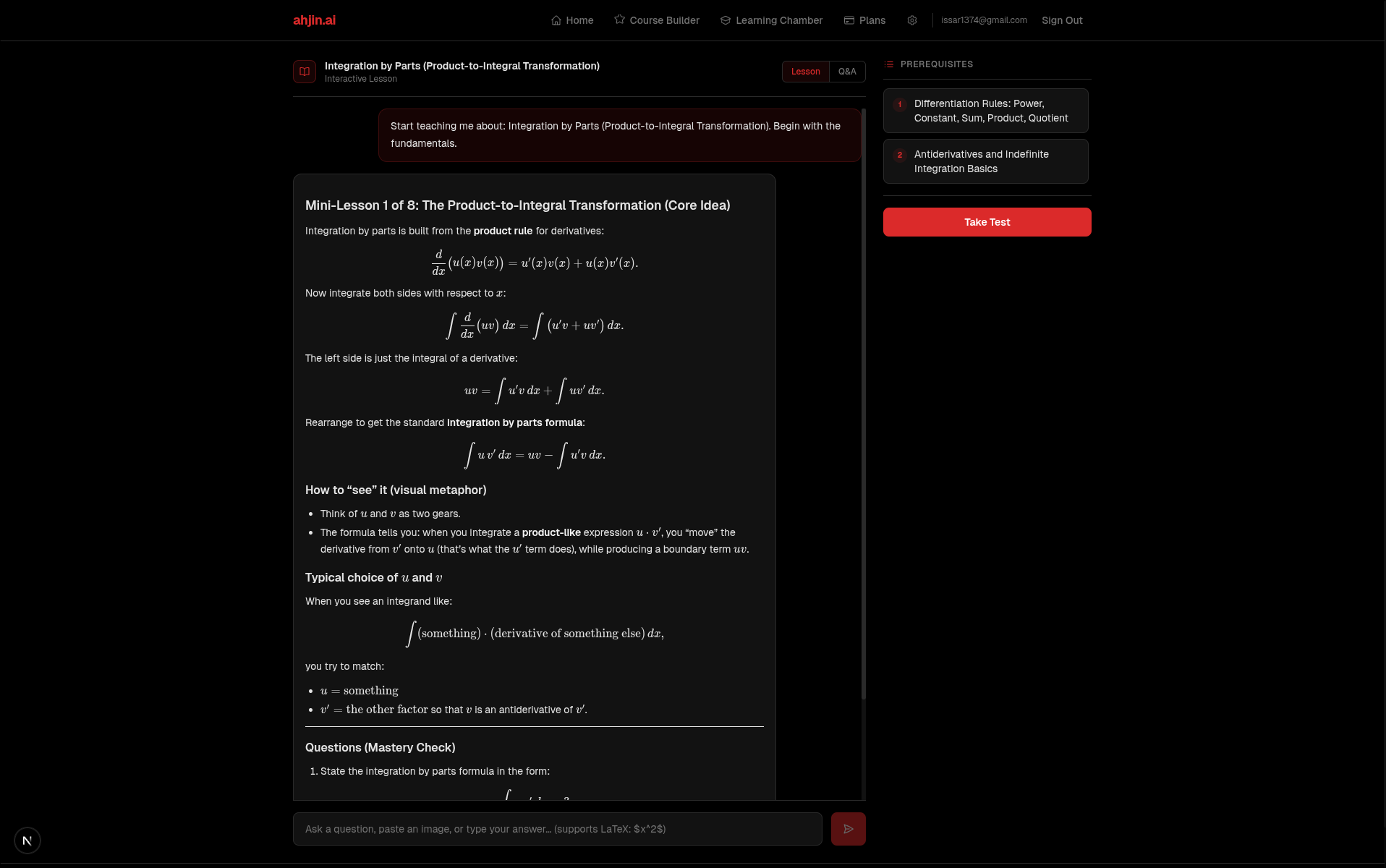
Step-by-step mini-lessons with LaTeX rendering, mastery checks, and Q&A mode.
∞
Topics
120
Tree Depth
AI
Powered